Basement Waterproofing in West Chester, PA
Water in a basement comes from one of three places: the ground, the roof, or a leaking pipe. Waterproofing only works when it targets the right one.
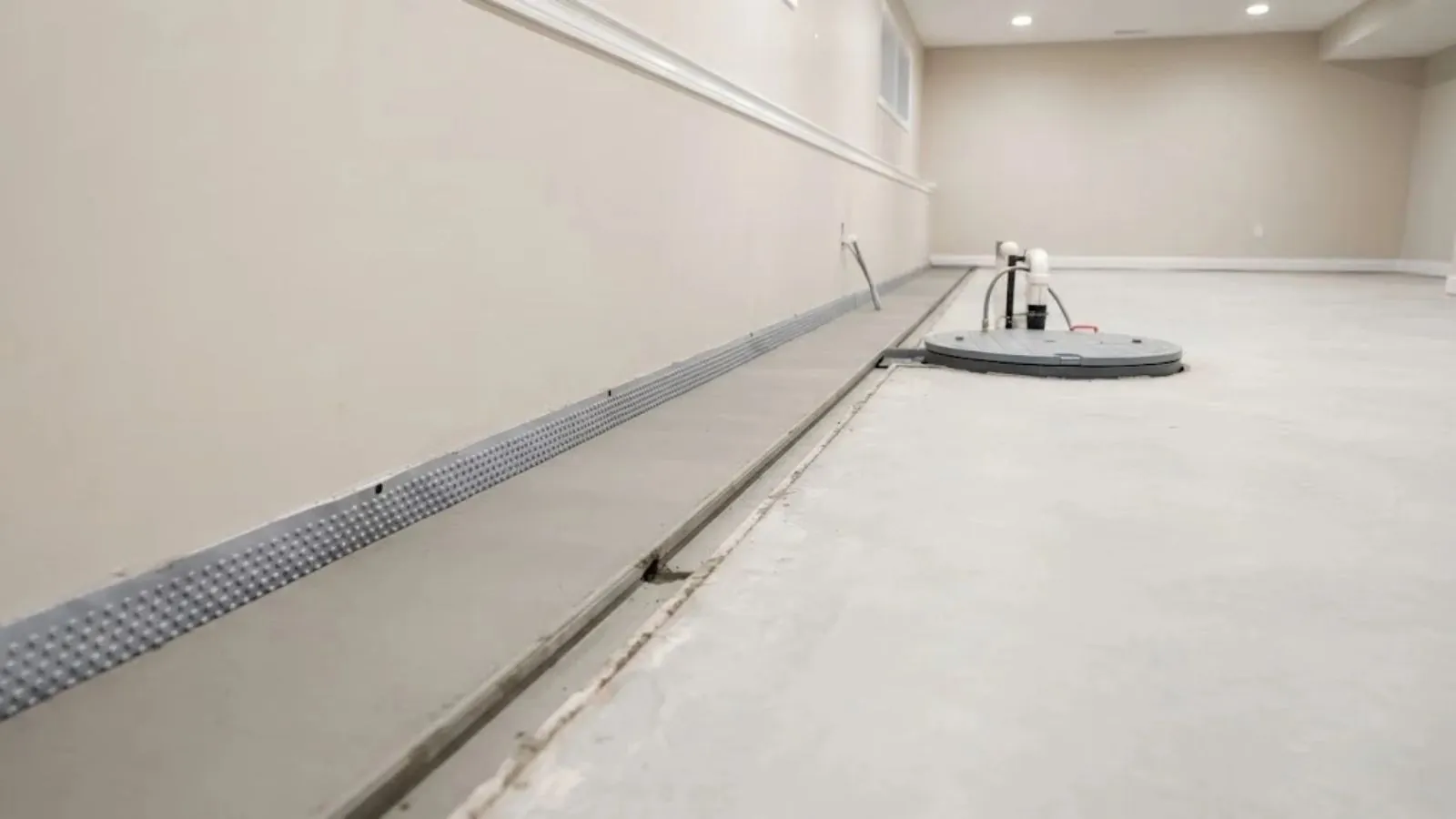
Is the water groundwater, roof runoff or a pipe?
A wet basement has three common sources. Groundwater pushes through the floor-wall joint or cracks after long rain. Roof and surface water drains toward the foundation when gutters overflow or the lot slopes toward the house. And a leaking pipe or fixture can leave puddles that look exactly like seepage.
A simple test helps. Tape a square of plastic wrap to the wall. If moisture forms under it, humidity is condensing.
If it forms on the wall side, water is coming through. If the wall is dry but a puddle appears near a pipe, the source is plumbing.
Start with the outside before the inside
Before paying for a basement system, check the cheap fixes that often matter most. Gutters should be clear, and downspouts should discharge several feet from the foundation. The soil should slope away from the house for the first few feet. Window wells should be clean and drain.
Plenty of damp basements improve after these steps alone. They also reduce the work an interior system has to do later, and they are worth doing even if you do install a drain and sump pump.
Where the water appears and what it means
| Where you see it | Likely source | Typical fix |
|---|---|---|
| Along the floor-wall joint after storms | Hydrostatic pressure from groundwater | Interior drain channel to a sump pit |
| Dark vertical cracks in the wall | Foundation crack seeping | Crack injection, sometimes with drainage |
| Damp corner below a downspout | Roof runoff | Extend downspouts, regrade the soil |
| Puddle around a pipe or the water heater | Plumbing leak | Plumbing repair |
| Musty smell with no visible water | Humidity or condensation | Dehumidification and ventilation |
Interior drainage or exterior work
Interior drainage fits when
- Water appears at the floor-wall joint
- The yard has plantings or paving and is hard to dig
- You want one system that keeps water off the floor
Exterior work fits when
- Walls are seeping from the outside
- A cracked or missing membrane is the cause
- Access around the house allows excavation
Exterior excavation in Pennsylvania requires a call to 811 at least three business days ahead, and the contractor must file their own ticket.
Water on the floor now?
Call the line. Shutting off a leaking pipe is the first step even if the water turns out to be groundwater.
The September 2021 storm and why it matters here
The remnants of Hurricane Ida put 6 to 8 inches of rain on Chester County on 1 and 2 September 2021 and set record flood levels on the Brandywine. A basement that stayed dry that week was a basement with working drainage and a working pump. One that flooded showed where the system was weak.
If your basement took on water then, write down where it appeared. That location is the best clue the contractor can have when designing drainage.
What affects the cost
Related work
A new pit usually pairs with sump pump repair and a battery backup. Hidden supply leaks that mimic seepage are traced by the process of tracing a hidden leak. If the floor slab is damp in one corner, slab leak repair can rule out a pipe under the concrete. The service covers the borough and East Bradford, West Bradford, East Goshen, West Goshen and Westtown.
What a good basement quote should include
Be cautious of any quote written without looking at the basement or without asking where and when water appears.
What to do before help arrives
Keep out of standing water near outlets and the panel, and do not run a vacuum or pump that is plugged in while you are wet. According to Pennsylvania's Underground Utility Line Protection law, any exterior excavation needs an 811 call at least three business days ahead.
West Bradford sits between the East and West Branches of the Brandywine, which is why low ground there fills quickly in a long rain. The West Bradford page adds notes on wells and older houses.
The Downtown Historic District has 3,137 contributing buildings built between 1789 and the 1930s, and buildings of that age often stand on stone or brick foundations. Seepage through walls like that usually calls for a drainage plan, not just a coat of sealer.
Common questions
No. A leaking pipe, a condensing cold pipe or a downspout dumping against the foundation can all look like seepage. Rule those out first.
A properly installed drain channel with a working sump can last decades, though the pump needs replacing about every ten years.
It removes the moisture source mold needs. Existing mold has to be cleaned or removed separately.
It depends on the municipality and the scope. Check with the borough or township office before excavation or electrical work.
Yes. Call the 24/7 line for an active flood and ask about pump and shutoff help.
It seals a crack against water, but a foundation that is still moving can reopen it. A contractor can tell if the crack is active.
Wet basement?
Basement waterproofing assessments across West Chester and nearby townships.
Call (610) 672-7601