How to Prepare Your Pipes for a Chester County Cold Snap
Most frozen pipes are predictable. They sit in the same cold corners of the same houses year after year. A few cheap steps before the first hard freeze prevent most of the calls.
Why freezing causes damage
Water expands as it freezes, about nine percent by volume. Ice forms first in the coldest part of the pipe and pushes unfrozen water ahead of it. If a closed faucet blocks the other end, pressure builds between the ice and the faucet, and the pipe wall gives way at its weakest point. The split can be well away from where the ice formed.
Often you do not notice until the ice thaws and water pours through the crack. A pipe that was frozen and thawed without any visible leak can still have a hairline split inside the wall.
Where pipes freeze first
| Location | Why it freezes | Fix |
|---|---|---|
| Exterior walls | Little insulation between pipe and outside air | Add insulation, open cabinet doors on cold nights |
| Crawlspaces and rim joists | Vents and gaps let in cold air | Seal gaps, insulate pipes |
| Unheated garages | No heat source | Insulate or relocate lines |
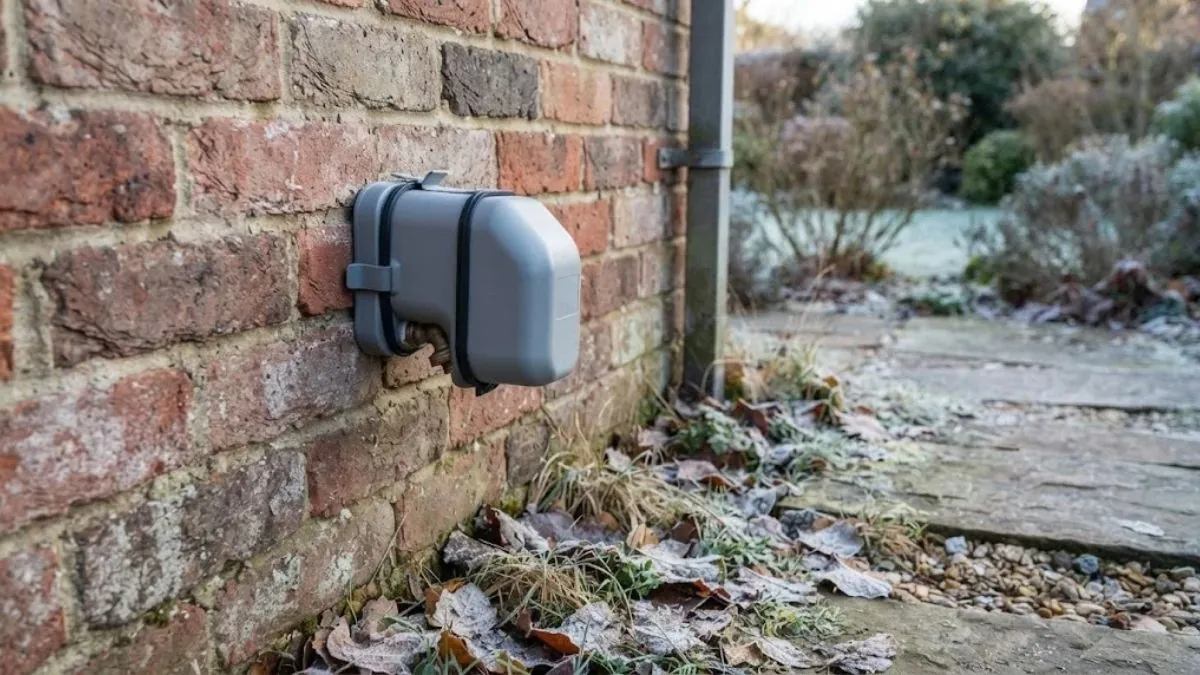
| Outdoor spigots | Connected hoses trap water | Disconnect hoses, close the interior valve |
| Attic and basement runs | Cold, thin insulation | Insulate or add heat tape |
Before the first hard freeze
On the coldest nights
Open cabinet doors under kitchen and bathroom sinks on exterior walls so warm room air reaches the pipes. Leave a faucet on the coldest side of the house dripping, since moving water is harder to freeze and a drip also relieves pressure if ice forms. Keep the thermostat at a steady setting, even when you are away, rather than setting it far back to save money.
If you travel in winter, ask someone to check the house, or shut off the main and drain the system if you will be gone for a long period.
Faucet down to a trickle?
Close the main and call. A plumber can thaw the line before it splits.
What to do if you find a frozen pipe
Open the tap
Leave the faucet open to let melting water and pressure escape.
Warm the pipe
Use a hair dryer on low heat or warm towels, starting at the faucet end. Never use a torch.
Check for leaks
When water flows, walk the line looking for drips. A leak means shutting off the main.
Call for repair
A split pipe needs a plumber, and a drywall opening may be required to reach it.
When a pipe has already burst
Close the main water valve immediately and open a low faucet to drain the lines. Stay clear of anything electrical that is wet. The plumber can then repair the split, which is the work described in emergency burst pipe repair. For the freeze itself, thawing a frozen pipe covers thawing and prevention steps.
Drying the structure afterward is a separate task. Wet drywall and insulation need to dry within a day or two to avoid mold, and water damage restoration companies use specialized equipment for that.
Westtown and the rest of the southern townships
Westtown, with its mix of older farmhouses, school buildings and newer subdivisions, shows how varied the risk is. Old stone houses often have pipes in exterior walls with minimal insulation. Newer houses may have pipes in garage ceilings. The checklist is the same, but the cold spots differ, so walk your own house on a cold night and feel where it is chilliest.
Insulating pipes the right way
Foam pipe sleeves are the cheapest and easiest insulation. Slit the sleeve lengthwise, slip it over the pipe, and tape the seam. For corners and fittings, use sleeves cut to shape or wrap with insulating tape. Insulation slows heat loss but does not create heat, so pipes in a space that drops well below freezing still need a heat source, such as heat tape or a small amount of warm air.
Heat tape and heating cable are made for pipes, and the instructions matter. Some are meant to be laid straight along the pipe and never overlapped. Some are rated for plastic pipe and some are not. Using the wrong product is a fire risk.
Insulation and heat options compared
| Option | Best for | Watch for |
|---|---|---|
| Foam pipe sleeves | Pipes in basements and crawlspaces | Gaps at joints and fittings |
| Insulating tape | Fittings and bends | Wrap overlap and moisture |
| Self-regulating heat cable | Pipes in unheated areas | Follow the instructions and check for damage |
| Insulated cover for spigots | Outdoor faucets | Not a substitute for draining and shutoff |
| Sealing air leaks | Rim joists, wall penetrations | Combine with insulation |
Away from home in winter
A house left unattended through a cold snap is the highest-risk situation, because a split can run for days before anyone notices. If the heat fails, the pipes can freeze, and if a pipe splits, the water keeps running. Ask a neighbor or relative to check the house, set the thermostat to a safe minimum, and consider a water leak sensor that sends an alert to a phone.
For longer trips, shutting off the main and draining the lines removes the danger entirely. A plumber can show you how to do it and how to refill safely.
After a hard freeze
Where to go next
If a pipe is already frozen or split, go to thawing a frozen pipe or emergency burst pipe repair, and see seasonal checks on the Westtown page.
Sources and standards
Sources: general freeze-protection guidelines from heat cable and pipe insulation manufacturers, which vary by product. Follow the instructions that come with any heat tape you buy.
Frozen pipe questions
A slow drip on the coldest side of the house helps keep water moving and relieves pressure.
Water freezes at 32 degrees, but pipes in exterior walls and unheated spaces can freeze when outdoor temperatures fall into the teens.
Sudden bursts are often covered for the resulting damage. The pipe itself often is not.
Properly installed and rated heat tape is common, but follow the manufacturer's instructions and replace damaged tape.
For a long absence, shutting off the main and draining the lines is the safest option.