Restaurant and Shop Plumbing: Grease Traps, Floor Drains and What Keeps Them Working
In a restaurant or a busy shop, a backed-up drain is not just a plumbing problem. It is lost sales. A few routine steps keep the lines moving.
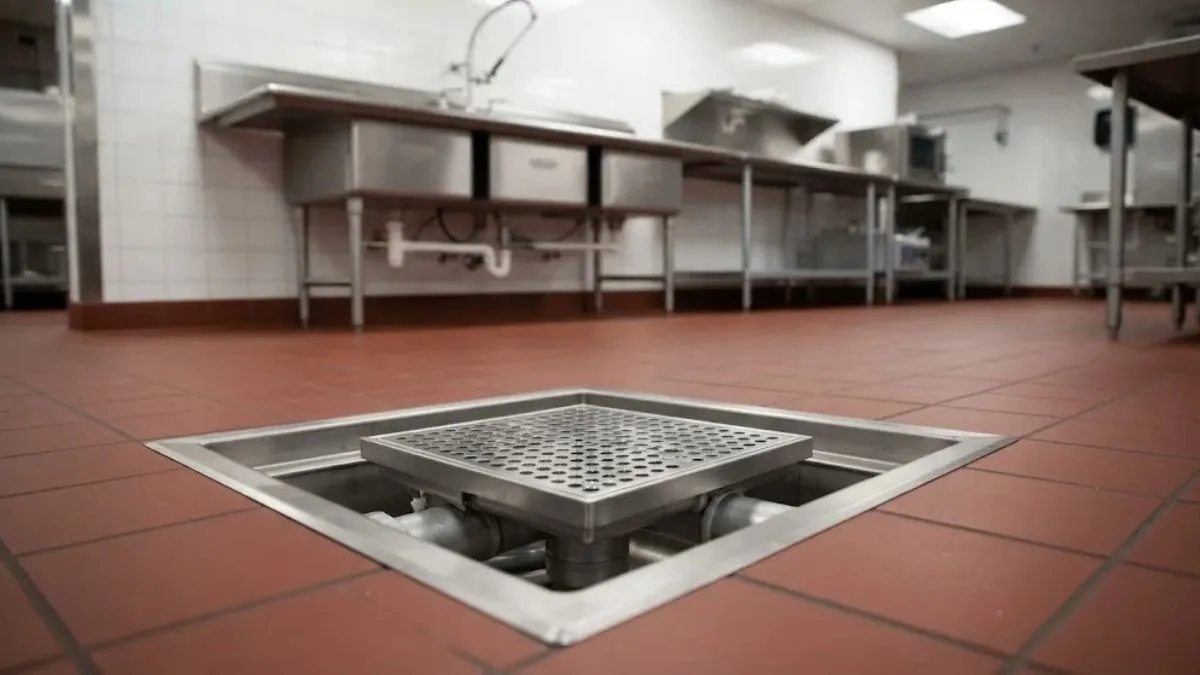
Why grease is the enemy of a commercial drain
Cooking grease is liquid when hot and solid when it cools. It enters the drain warm, travels a few feet and then sticks to the pipe wall, building a layer that narrows the pipe. Soap and food solids bind to it, and the pipe closes gradually until one busy evening it stops completely.
A grease interceptor, sometimes called a grease trap, sits in the drain line and slows the water so grease floats to the top and can be removed. It protects the building's pipes and the public sewer.
Grease interceptors and floor drains at a glance
| Component | What it does | Needs |
|---|---|---|
| Grease interceptor | Separates grease from kitchen wastewater | Regular cleaning and pumping |
| Floor drain | Collects spills and wash water | A water-filled trap, cleaning, no debris |
| Floor sink | Receives indirect waste from equipment | Air gaps and cleaning |
| Cleanout | Gives access to the line | Clear access and caps |
| Backflow preventer | Protects the water supply from contamination | Annual testing where required |
A routine that prevents most backups
Drain backing up during service?
Call and say it is a commercial kitchen. Dispatch can prioritize.
Floor drains and sewer gas
A floor drain that is rarely used can dry out, and then it loses the water seal that blocks sewer gas. A musty or sewer smell in a back room is often a dry trap. Pouring water in solves it, but a drain that smells again soon after may have a venting or leak problem.
Floor drains can also be the first place a main line backup shows up. If the drain in the kitchen or basement of a shop starts to gurgle or rise, stop adding water and call. The cause may be in the building's lateral, not the drain itself.
Keeping the lines clean on a schedule
For a busy kitchen, scheduled commercial plumbing service, including periodic jetting, is cheaper than emergency calls. A camera pass shows buildup before it blocks, and the interval can be adjusted to the kitchen's real use.
Backflow testing belongs on the same calendar. Devices on dishwashing equipment, boiler feeds and irrigation often need annual testing, and the reports must be filed with the supplier or the municipality.
West Goshen and the commercial mix
West Goshen Township has restaurants, car dealerships, offices and corporate buildings along its main roads, as well as university buildings near the borough line. That mix means a plumber working there sees commercial problems daily. Chester County also licenses and inspects food establishments through its health department, and a kitchen that cannot keep its drains clear is likely to face questions. Routine service is the cheap way to avoid them.
What fails first when a kitchen is busy
The weakest points in a commercial kitchen line are predictable. The pre-rinse sink near the dish station sends grease and food scraps into a branch that may be small. Floor drains near the cooking line collect hot grease from spills. And the main line, which serves everything, runs through a section of pipe the restaurant may share with neighbors.
Backups start at the lowest opening, usually a floor drain or a mop sink. If the floor drain begins to bubble or fill during service, the cause is generally downstream of that drain. Stop adding water, protect the floor and call. Pouring more water on a surging line only moves the sewage into the dining area faster.
Early warning signs and what they mean
| Sign | What it usually means | Action |
|---|---|---|
| Slow sink at the dish station | Grease coating the branch | Schedule cleaning before the weekend |
| Floor drain gurgles when a fixture drains | Partial blockage downstream | Call before service |
| Sewer smell near a floor drain | Dry trap or venting problem | Pour water in, then call if it returns |
| Grease visible in the interceptor lid | Interceptor is full | Pump and clean now |
| Backup only after closing time | Heavy dumping of fryer oil or mop water | Review closing procedures |
Training and routine matter more than equipment
Most commercial backups trace back to a habit. Fryer oil is poured into a floor drain at closing. Food scraps are rinsed into a sink without a strainer.
A grease interceptor goes uncleaned for months because nobody owns the task. Writing a short routine and assigning one person to check the interceptor lid and the floor drains weekly costs nothing and prevents most of these.
Keep a log with dates, who checked, and what was found. If an inspector asks, or if a landlord disputes responsibility, the log is the evidence that the kitchen did its part.
What property owners should keep on file
Cleaning an interceptor and what the pumper should leave behind
An interceptor is cleaned by pumping out the grease layer, the water and the settled solids, then scraping the baffles and walls and refilling the unit with clean water. A pumper who only skims the top and leaves the solids behind is not doing the job. Ask for a receipt that lists the date, the volume removed and where the waste was taken.
Many municipalities and authorities set the maximum interval between cleanings, and some require records. Even where nobody checks, the real test is simple: if the layer of grease reaches a quarter of the depth of the unit, it is time.
What to do if a kitchen drain backs up during service
Stop all dishwashing and sink use, and keep staff away from wet floors near cooking equipment. Close off the affected area, put down absorbent material, and call for a plumber. Do not pour chemical cleaners into a standing drain, because the next person to work on it has to handle that water.
Where to go next
Building-wide service is under plumbing for businesses and device testing under backflow preventer service, with the West Goshen page describing the commercial mix there.
Sources and standards
Sources: the plumbing code the borough or township enforces for grease interceptors and backflow protection, and the Chester County Health Department for food establishment licensing. Confirm local intervals according to your authority.
Commercial drain questions
It depends on size and use, often every one to three months for a busy kitchen.
The trap seal may have dried out. Pour water in, and call if the smell returns.
No. It cools farther down the line and sticks to the pipe.
Often yes, on a schedule, with a camera to confirm.
The lease decides. Document the cause with the plumber.