A Running Toilet: How Much Water It Wastes and How to Fix It
A toilet that runs between flushes is the most common hidden water waster in a house. It is also one of the cheapest to fix.
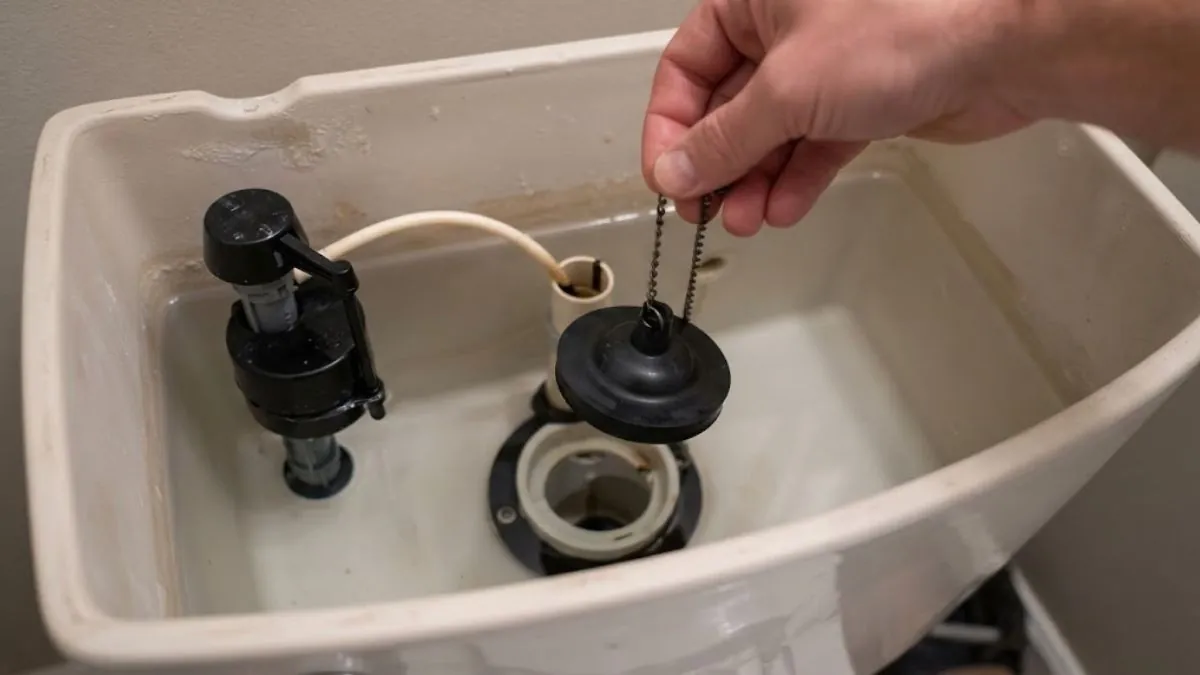
How much water a running toilet wastes
A toilet that leaks from the tank into the bowl or runs constantly can waste a surprising volume. The EPA's WaterSense program has said a leaky toilet can waste about 200 gallons a day, and a toilet that runs constantly can waste more. Over a month, that is thousands of gallons, and you pay for every one.
Many leaks are silent. A faint trickle in the bowl or a fill valve that cycles every few minutes may go unnoticed for months. The water bill is often the first sign.
Find the cause in ten minutes
Do the dye test
Add a few drops of food coloring to the tank. Do not flush. Wait twenty minutes. If color appears in the bowl, the flapper is leaking.
Check the water level
The water in the tank should stop about an inch below the top of the overflow tube. If it keeps rising into the tube, the fill valve is not shutting off.
Look at the chain
A chain that is too short holds the flapper open slightly. One that is too long can get caught under it.
Check the flapper
Press on it. If it feels soft, warped or slimy, it is worn and should be replaced.
Test the shutoff
Close the valve behind the toilet. If the fill sound stops, the fill valve is the problem.
What each symptom points to
| Symptom | Likely cause | Fix |
|---|---|---|
| Color in bowl after dye test | Worn flapper or seat | Replace flapper |
| Water running into the overflow tube | Fill valve set too high or failed | Adjust or replace fill valve |
| Phantom flushes every few minutes | Slow flapper leak | Replace flapper |
| Hissing from the tank | Failing fill valve | Replace fill valve |
| Water around the base | Wax ring or loose bolts | Reset the toilet |
Fix did not stop it?
Call for toilet repair and ask about a meter check.
Parts, tools and the replacement job
Flappers and fill valves are inexpensive and available at hardware stores. Matching the flapper size, usually two or three inches, and the style to your toilet matters. Photograph the old part before buying. Most replacements take about fifteen minutes with no special tools.
If the toilet is old, cracked or repeatedly problematic, replacement may be the better option. Toilet repair covers both. A WaterSense-labeled toilet uses 1.28 gallons per flush or less, which cuts water use for every flush.
When the meter keeps moving after the fix
If you have repaired the toilet and the water bill remains high, other leaks may be present. A fifteen-minute meter test with all fixtures off will tell you whether water is still moving. If it is, see high water bill and meter leak testing for what to check next.
Common culprits include a second toilet, an outdoor spigot, an irrigation valve and a hidden pipe leak. Checking them in order is faster than guessing.
A note for Westtown households
Westtown has a mix of older homes and newer subdivisions, along with school and institutional buildings. In older houses, toilets may be decades old with worn valve seats that no flapper can seal. In larger buildings, many toilets multiply the waste. A walk-through with the dye test, once a year, is a cheap way to catch the problem before it costs more.
Two kinds of leak, and why one hides
A running toilet comes in two forms. The obvious one is the fill valve that never shuts off, so water runs down the overflow tube with a faint hiss you can hear in a quiet house. The hidden one is a flapper that leaks a little, so water seeps from the tank into the bowl and the fill valve tops up the tank every few minutes. That version is nearly silent.
The dye test exposes the hidden leak. A flapper that has hardened or warped after years of sitting in cleaning chemicals will let a thin film of water pass, and no amount of jiggling the handle will cure it. Replacing it takes minutes and costs very little.
Replacement parts at a glance
| Part | Typical life | Sign it needs replacing |
|---|---|---|
| Flapper | Several years | Color in the bowl after dye test, phantom flushes |
| Fill valve | Several years | Hissing, water level above overflow tube |
| Flush valve seat | Long, but pitted by age | Leak persists after a new flapper |
| Supply line | Replace with fixtures | Dampness at the nut, corrosion |
| Wax ring | Long, unless disturbed | Water around the base, rocking toilet |
When a new toilet is cheaper than another repair
A toilet older than the early 1990s may use well over three gallons a flush, compared with a current WaterSense model at 1.28 gallons or less. In a household with several people, the savings add up on the water bill. If the toilet is also cracked, clogs often or rocks on the floor, replacing it solves all of those at once.
Choose the bowl shape and height that suit the household, confirm the rough-in distance, and have the installer inspect the flange and the floor around it. A rotten subfloor under an old toilet is easier to fix before the new one goes in.
Keep an eye on the whole bathroom
Replacing a flapper in about ten minutes
Close the supply
Turn the valve behind the toilet clockwise, then flush to drain the tank.
Unhook the old flapper
Slip the ears off the pegs on the overflow tube and unclip the chain.
Match the new part
Take the old flapper to the store, or photograph the brand and size printed in the tank.
Fit and adjust the chain
Clip the chain so it has about half an inch of slack when the flapper is closed.
Test
Open the supply, let the tank fill, and repeat the dye test to confirm the leak has stopped.
Where to go next
Repairs and replacements are under fixing a running toilet, bills under a high water bill check, and the Westtown page has seasonal checks.
Sources and standards
Sources: the EPA WaterSense program on toilet leaks and flush volumes. According to WaterSense, a leaky toilet can waste about 200 gallons a day.
Running toilet questions
A slow flapper leak lets water drain from the tank, so the fill valve refills it from time to time.
Often several years. Chemicals in tank cleaners can shorten its life.
Usually. Flappers and fill valves are simple parts.
Some chlorine tablets deteriorate rubber parts quickly.
If it is cracked, clogs often or has persistent leaks at the base.