Water Softener Installation & Repair in West Chester, PA
Scale on faucets, spots on glassware and short-lived water heaters are classic hardness symptoms. A softener fixes them, but only if it is sized and set correctly.
How hard is your water, really?
Hardness varies from house to house depending on the source, so guessing leads to an oversized or undersized softener. Aqua Pennsylvania's 2025 report for the West Chester system names Brandywine Creek and two wells as the sources and does not list a hardness figure, so a test is the reliable route. A simple strip kit gives a rough value and a lab or professional test gives a more accurate one.
Homes outside the public system, on private wells permitted by the Chester County Health Department, should test their well water directly.
Sizing a softener without over-buying
A softener's capacity is measured in grains it can remove between regenerations. Sizing comes from two numbers: how hard the water is, in grains per gallon, and how many gallons the household uses in a few days. A softener that is too small regenerates constantly and wastes salt. One that is too large may sit with water that goes stale between cycles.
A rough method is to multiply the number of people by about 75 gallons a day, multiply by the hardness, and choose a unit whose capacity covers several days of that figure. Your plumber can run the numbers once the hardness test is done.
Softener problems and fixes
| Problem | Likely cause | Fix |
|---|---|---|
| Hard water despite a softener | Empty salt, bridged salt or a stuck valve | Break the bridge, refill, test |
| Salty taste | Brine valve or injector fault | Service the valve |
| Low water pressure after install | Resin fouling or bypass setting | Clean resin, check bypass |
| Salt mushing at the bottom | Humidity or wrong salt type | Clean the tank, change salt |
| Constant running to drain | Failed control valve or seal | Replace seals or valve |
What a proper installation includes
Test and size
Hardness and household water use set the capacity.
Plumb the unit
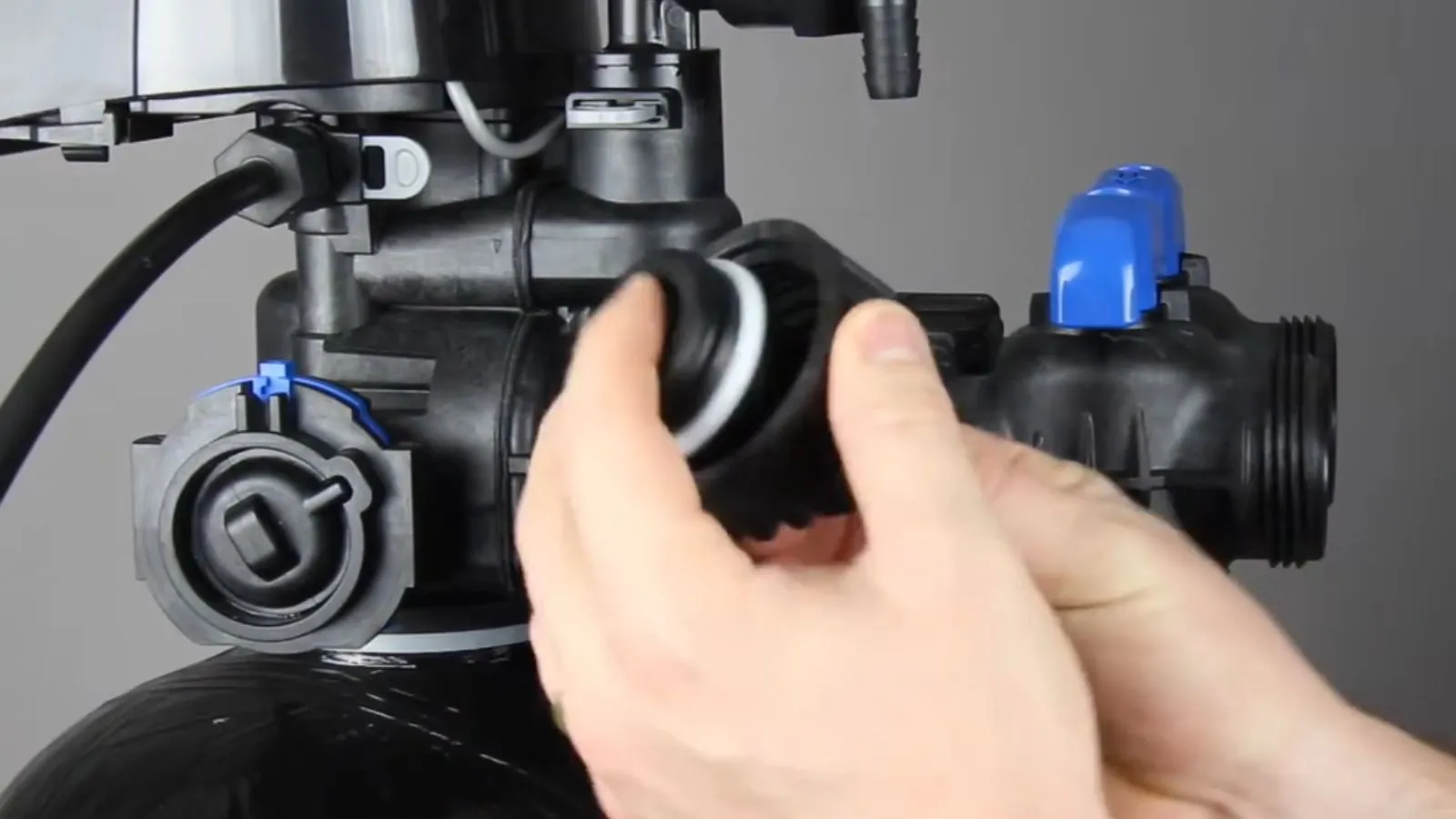
The softener is placed after the main shutoff and before the water heater, with a bypass.
Connect drain and overflow
Regeneration water needs a legal drain path.
Program and test
The control is set for hardness and capacity, then regenerated and tested.
Softener not softening?
Call and describe the symptoms. Many issues are a quick service.
Softener or filter?
A softener swaps calcium and magnesium for sodium so scale does not form. It does not remove chlorine, lead, PFAS or other contaminants. If your concern is taste or a specific contaminant, a water filtration system addresses that. Many homes use both.
What affects the price
Protecting appliances
A softener helps protect the water heater, so if your tank is failing early, check hardness before buying another one. Water heater replacement options and softener installation are often done in the same visit.
Salt types and what they mean for upkeep
| Salt | Characteristics | Best for |
|---|---|---|
| Solar salt | Crystals that dissolve slowly, may leave residue | Cost-conscious owners who check the tank |
| Evaporated pellets | Pure, dissolve evenly, less residue | Most households |
| Rock salt | Cheaper, more insoluble material | Occasional use, needs more cleaning |
| Potassium chloride | No sodium, costs more | People limiting sodium |
Whatever salt you use, check the tank monthly. Hard-pan salt bridges, where a crust forms above empty space, are a leading reason owners think the softener has failed.
Where the softener drain goes
Every softener sends brine and rinse water to a drain when it regenerates. The drain line needs an air gap so wastewater cannot flow back into the unit, and it should go to a standpipe, floor drain or laundry sink, not directly into a sealed drain pipe.
If the softener is in a basement below the sewer level, a small condensate or sump pump may be required. Ask the plumber where the water will go before agreeing on a location, because the drain path decides where the unit can sit.
What to do if the unit leaks or overflows
Move the bypass valve to bypass, unplug the control head, and mop up salt water, which is slippery and corrodes metal. Softener capacity ratings are published according to industry test standards, so compare models on the same basis.
See also
If a softener drain line backs up into a floor drain, drain cleaning visits is the first fix to try.
Homes on private wells need their own water test before a softener is sized, and wells in Chester County are permitted by the county health department. The West Bradford page lists that office.
Homes between Marshall Square and the university campus tend to have compact utility rooms, so the softener's footprint and the drain connection need checking before delivery. Ask whether a floor drain or standpipe is nearby.
Common questions
White scale on fixtures, spotted glassware, dry skin after bathing and short-lived appliances are common signs. A hardness test confirms it.
No. It reduces hardness but does not remove contaminants.
Check monthly and keep the tank at least a third full.
Salt bridging, an empty tank or a stuck valve are the common causes.
Yes, urgent leaks are covered by the 24/7 line.
Yes, but iron and other minerals may need pre-treatment.
Hard water causing trouble?
Water softener installation and repair across West Chester.
Call (610) 672-7601