Call 811 Before You Dig: What Pennsylvania Law Means for Sewer and Water Line Repair
Before a trench opens for a sewer or water line, someone has to ask where the gas, electric and communications lines are. In Pennsylvania that call is the law, not a courtesy.
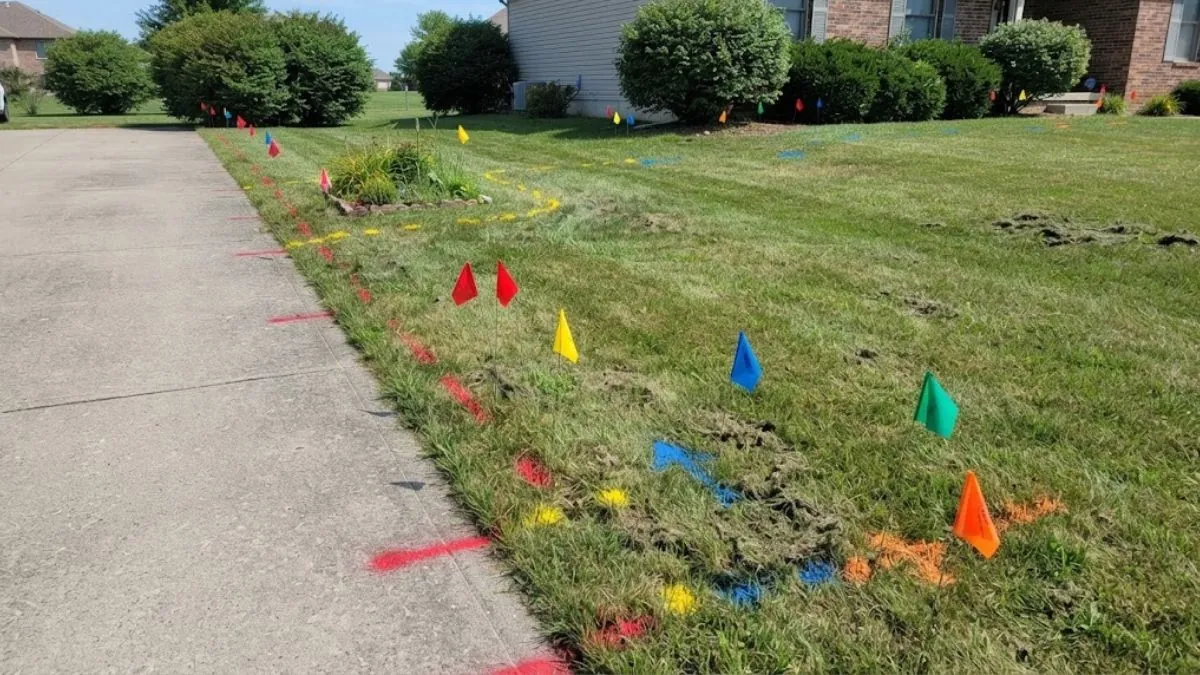
What the 811 call does
Pennsylvania's One Call system, also called PA 811, is a free service that notifies utilities when someone plans to dig. Each utility with buried lines in the area sends a locator to mark them with paint or flags. The marks are color-coded: red for electric, yellow for gas and oil, orange for communications, blue for potable water and green for sewer, with white outlining the proposed dig area.
The law requires anyone planning excavation to call at least three business days before starting, and not more than ten. The call is free for homeowners and can be made 24 hours a day by dialing 811.
Who calls, and when
| Person | Responsibility | Notes |
|---|---|---|
| Homeowner digging a fence post or tree hole | Calls 811 at least three business days ahead | Applies even to small projects |
| Contractor doing excavation | Calls 811 and holds the ticket | The Public Utility Commission says contractors should submit their own tickets |
| Utility with buried lines | Marks the lines within the notice period | Marking is free |
| Designer of a project | Requests facility information during design | Separate from the excavation ticket |
Why it matters for sewer and water line work
Sewer and water lines are often deeper than a fence post, and the trench is long. A long trench is more likely to cross something. Gas lines, in particular, can run across a lateral at a shallow depth, and a nick in one is dangerous.
The Pennsylvania Public Utility Commission enforces the state's damage prevention law, and it has reported hundreds of cases a year involving skipped notifications and improper excavation. A contractor who takes the call seriously is protecting you, themselves and your neighbors.
How a dig proceeds after you call
Call 811 or file online
Give the address, the work type and the dig area. Mark the area with white paint or flags.
Wait for markings
Utilities have three business days to respond. Do not dig before the legal start date.
Verify the marks
The contractor checks that all expected utilities have responded and understands what each color means.
Hand-dig near lines
Within a tolerance zone around marked lines, digging is done carefully by hand.
Keep marks visible
If work pauses for days, the marks may need refreshing. Ask the contractor.
Planning a sewer or water line dig?
Call and ask the plumber how the 811 ticket and the camera step fit together.
Trenchless repair still needs the call
Trenchless methods reduce digging, but they still need entry and exit pits. Those are excavation under the law, and they need a ticket. The advantage of trenchless repair is not skipping the call. It is that the pits are small and the surface above the pipe stays intact.
Before choosing a method, a camera inspection shows the pipe's condition. Together with the marks, it tells the contractor whether lining, bursting or an open trench fits. See sewer line repair for how those options compare.
Permits and the township
An 811 ticket is not a permit. Municipal permits are separate. West Goshen Township, for example, handles its sewer and code questions from its office on Paoli Pike, and neighboring townships do the same for their own areas. Ask the plumber which permits apply to your address and who files them.
Do not skip these steps
What the markings mean and how long they last
Marking colors follow a national standard. Red is for electric, yellow for gas and oil, orange for communications, blue for potable water, green for sewer and drains, purple for reclaimed water and pink for temporary survey marks. White paint or flags outline where the excavation is planned. The lines show approximate positions, and the law treats a strip on each side of the mark as a tolerance zone where digging must be careful.
Markings do not last forever. Rain, traffic and mowing wear them away, and if a project is paused for several days, the contractor may need to ask for them to be refreshed. Take photos of the marks before work starts so there is a record of where the lines were.
What to do if something goes wrong while digging
| Situation | Action |
|---|---|
| You hit a gas line or smell gas | Leave the area, call 911 and the gas utility from a safe distance |
| You hit an electric line | Stay away from the equipment and anything touching the ground, and call 911 |
| You damage a water or sewer pipe | Shut off water if you can, and call the owner |
| You find a line that was not marked | Stop, call 811 again and report it |
| You see a cracked or exposed line | Keep people back and report it |
Who owns what underground
Underground lines belong to different parties. The utility owns its main lines and the service lines up to a boundary. The property owner owns the rest, including the sewer lateral and the water line past the boundary. Private lines such as irrigation, yard lighting and some gas lines to outbuildings are not always marked by the utilities, because they belong to the owner.
Ask the contractor how private lines on your property will be located. A private locator can find them with equipment, and it is worth the expense before opening a trench.
Hiring for the dig: what to ask
Ask the contractor whether they will place the 811 ticket themselves, how they handle marks that overlap with planned work, and how they restore the surface. Ask for the ticket number in writing. A contractor who handles this confidently has done it many times. One who suggests skipping the call, or asks you to place it on their behalf, is a warning sign.
Where to go next
The repair methods themselves are in fixing a cracked or root-damaged lateral and repair without trenching the yard, and the West Goshen page lists where to ask about permits.
Sources and standards
Sources: the Pennsylvania Public Utility Commission's 811 materials and the Pennsylvania Underground Utility Line Protection law as summarized by the PUC. According to the PUC, contractors should submit their own tickets.
811 questions
Yes. Anyone planning excavation must call at least three business days before digging.
No. The service is free for homeowners.
Yes. The law applies regardless of the size of the project when digging is involved.
They are valid for a limited period, and if the work pauses, markings may need to be renewed.
No. The call is required before hand digging as well.