Hydro Jetting in West Chester, PA
Snaking opens a hole through a clog. Jetting washes the pipe clean. If a drain keeps clogging weeks after being cleared, the walls of the pipe are probably coated.
Why does my drain clog again after snaking?
A cable opens a channel through a blockage but leaves a coating of grease, soap scum or scale on the walls. That coating narrows the pipe, and debris catches on it again. Within weeks the drain slows, and you are back where you started.
Hydro jetting addresses that coating. A high-pressure water stream scours the pipe walls, restoring the diameter that the pipe had when it was new.
What the nozzle actually does inside the pipe
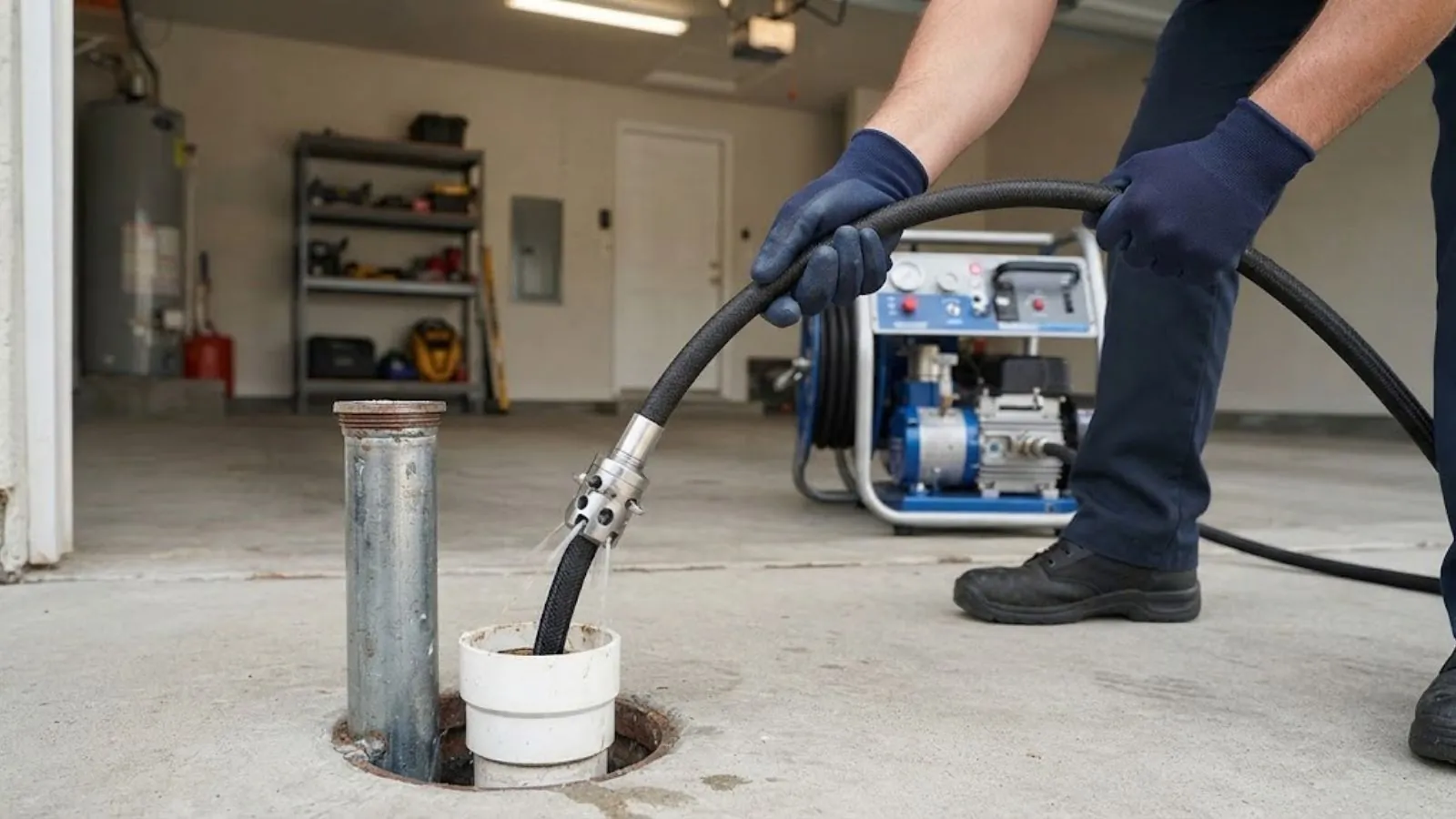
A jetting nozzle is a metal head with several small holes. Water at high pressure exits those holes in a pattern that depends on the design. Rear-facing jets pull the nozzle forward through the pipe and push debris back toward the opening.
Side jets wash the walls. A forward jet breaks up the plug ahead.
Because the water does the cutting, jetting leaves the pipe interior smoother than a cable does. A cable can score a pipe if the cutting head is too aggressive, while a jet follows the pipe's shape and removes only what is stuck to it.
How a jetting visit works
Inspect first
A camera confirms the pipe is intact enough to jet and shows where buildup sits.
Choose the nozzle
Forward-facing nozzles open a clog. Rotating nozzles spray backward to scour walls. Root cutters handle roots.
Jet the line
The hose feeds through a cleanout while water pressure, typically in the low thousands of psi, scours the pipe.
Verify
A second camera pass shows the pipe walls and confirms flow.
Snaking or jetting
Snaking is enough when
- A single clog, such as paper or a toy, is the cause
- The pipe walls are otherwise clean
- You need the fastest, lowest-cost fix
Jetting is better when
- Grease or soap scale keeps returning
- Roots are growing back
- The camera shows heavy coating on the walls
Jetting is not a repair. A cracked or offset pipe may leak water into the soil when jetted, so the camera step matters.
Clogs keep coming back?
Call and ask about camera inspection and jetting.
What affects the price
Where jetting fits in West Chester
Restaurants and commercial kitchens near the borough's downtown often schedule jetting to control grease, and residences with older cast iron lines benefit when scale builds up. If the camera reveals a defect, sewer line repair follows. For basic clogs, start with clearing a stubborn clog.
When a plumber will decline to jet
Declining to jet is a good sign, not a bad one. It means the plumber is matching the method to the pipe, which is what keeps a cleaning from turning into a repair.
Jetting for restaurants and larger buildings
Kitchens put cooking grease through drains every day, and grease cools into a solid layer on the pipe wall. Cabling opens a path, but the layer rebuilds. Jetting on a schedule, matched to the kitchen's use, keeps the pipe walls clean and avoids Saturday-night backups.
Residential owners with a large family or a history of grease clogs can use the same approach on a smaller scale, checking with a camera to decide how often cleaning is actually needed.
What to do before a jetting visit
Clear the area around the cleanout, keep pets and children away and tell the crew about any known damage. Jetting pressures are chosen according to the pipe material and the camera findings.
See also
A restaurant or shop that jets on a schedule should also know about commercial plumbing service for grease lines.
Shops, restaurants and offices along the main roads of West Goshen are the usual candidates for scheduled jetting, because grease builds in the same line every day. A camera pass shows when the next cleaning is due.
Restaurants and shops along Gay and High Streets in the Downtown Historic District send grease down the same lines every day. Scheduled jetting after a camera inspection keeps that line open between emergency calls.
Common questions
Used properly on sound pipe, no. A camera first rules out fragile or broken sections.
Only when needed. A camera tells you if buildup is returning.
Rotating or cutting nozzles can cut roots, but they may regrow unless the entry point is repaired.
It uses a lot of water, but the water goes down the drain. The plumber protects the work area.
Jetting is usually scheduled. Emergency clogs are cleared first.
Yes, because of equipment and time, but it can reduce repeat visits.