Emergency Water Mitigation in West Chester, PA
Mitigation is the first stage of a water loss: stop the spread, remove the water and start drying before materials are lost. It is quick, temporary and decisive.
What mitigation is, and where it stops
Mitigation is the emergency work done in the first hours and days: shutting off the source, removing water, setting up drying and saving what can be saved. Restoration is the repair and rebuilding that follows. They are often done by the same crew, but they are different in goal and timeline.
For the full cleanup and rebuild, see restoring a water-damaged room. For the pipe, see burst pipe repairs.
Moisture does not stop at the wet line
Water travels. It wicks up drywall several inches above the visible stain, runs under baseboards, and settles in insulation and wall cavities where it cannot be seen. A floor that looks dry on top may hold water in the subfloor below it.
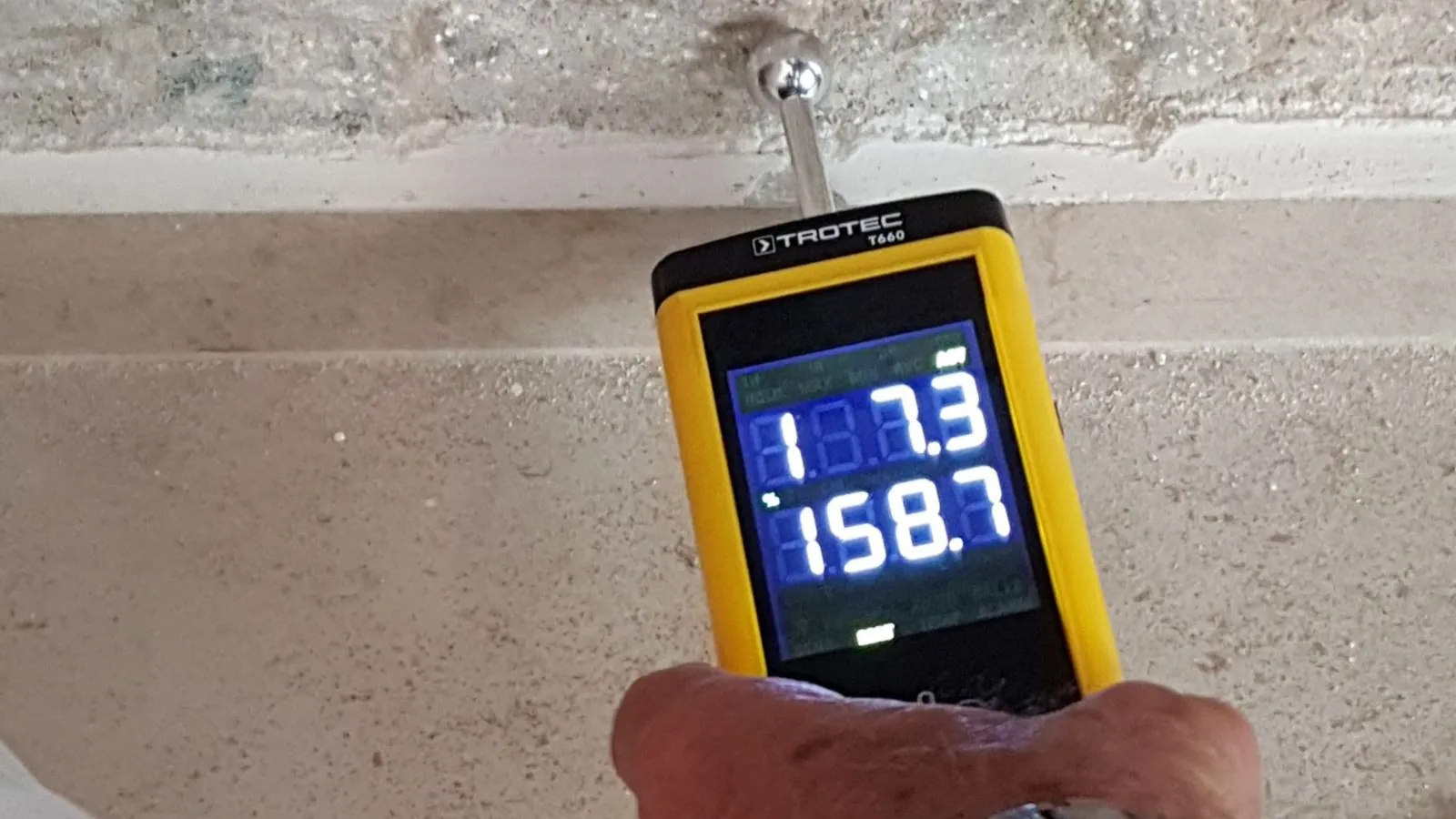
That is why mitigation crews use moisture meters and, where needed, thermal cameras rather than relying on what the eye sees. The aim is to dry the whole wet zone to its normal level, not only the part that looks wet, because materials that stay damp inside are where mold starts.
The first 48 hours
Hour 0 to 1
Stop the water. Close the main, turn off power to wet areas if safe, and call.
Hour 1 to 6
Extraction crews remove standing water and open up wet areas to air.
Day 1
Air movers and dehumidifiers go in. Moisture readings set the baseline.
Day 2
Readings are repeated, equipment is repositioned, and damaged materials that cannot be dried are removed.
What can be saved, and what usually cannot
Often salvageable if dried quickly
- Hardwood floors with clean-water exposure
- Solid wood furniture
- Drywall wet for a short time
- Concrete and masonry
Often removed
- Carpet padding
- Insulation that has soaked
- Particleboard furniture
- Anything touched by sewage
Contaminated water changes the rules. Sewage-related losses involve removal of porous materials and disinfection.
Water spreading through the house?
Call the water damage line now. Every hour counts.
Why speed matters
Wet materials start to degrade and can grow mold if left damp. Industry guidance under the ANSI/IICRC S500 standard emphasizes quick action because the longer water sits, the greater the area it affects and the more it costs.
Document the loss, move valuables to dry spaces and let the insurer know early.
What affects the cost
Related help
If the water came up through the floor or a failed pump, a new sump pump and backup helps prevent it again. If a wall or ceiling is still leaking, wall leak repair finds the source.
What you can do before the crew arrives
Safe, simple steps that help.
If sewage or floodwater is involved, skip the cleanup and keep everyone out. The line to call is the same, and the crew will treat the area differently.
Equipment you will see in the house
Mitigation crews bring a recognizable set of tools. Air movers are low, loud fans that push air across wet surfaces. Dehumidifiers pull moisture out of the air so the walls can release more.
Extraction units pump and vacuum standing water. Injection or drying mats can pull water from under hardwood in some cases.
The noise and heat can be surprising, and the equipment usually runs around the clock for several days. Ask the crew how many amps the equipment needs, so you do not trip breakers or run extension cords across wet floors.
What to do before the mitigation crew arrives
Stay out of water near electricity, move valuables to dry rooms and photograph the damage. Mitigation is done according to the ANSI/IICRC S500 standard, which classifies water by source and drying class.
Marshallton and the rest of West Bradford reach the water damage line through the same all-night number as every other township. Say your road and whether water is still entering.
Offices and apartments around the courthouse often share walls and floors across several tenants. Say whether water is moving to the unit below when you call, because that changes the order of the drying work.
Common questions
Mitigation is the emergency stage. Restoration is the repair that follows.
As soon as possible, ideally within hours.
Small clean-water spills, yes. Larger losses need professional equipment.
Often for sudden losses. Check your policy.
Yes, 24/7.
Moisture meters and repeated readings confirm.