After a Flood: What To Do First in Your Basement
The first hours after a flood decide how much of the basement can be saved. Safety comes first, then water, then documentation, then drying.
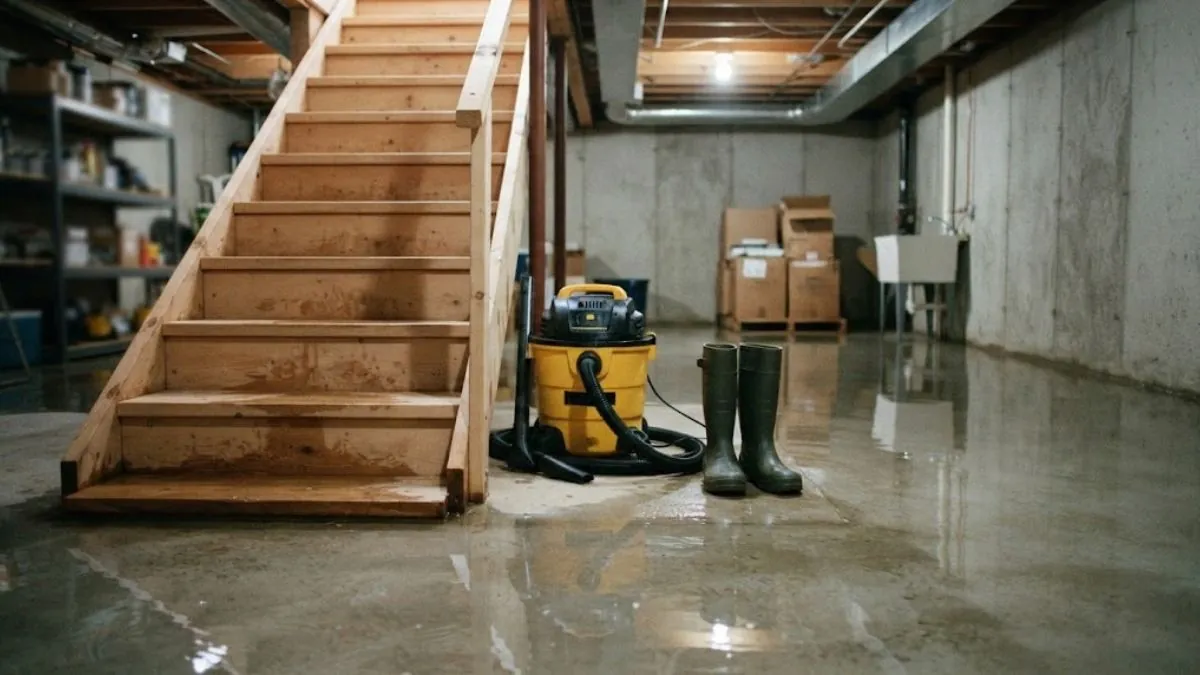
Safety first
A flooded basement can hide hazards you cannot see. Standing water may touch outlets, the electrical panel or appliances, and it may carry sewage or chemicals. Do not walk into deep water. If the water is above outlet height, or the panel is in the water, stay out and have the power shut off from outside the flooded area by the utility or an electrician.
Floodwater from outside the house is generally considered contaminated. Wear waterproof boots, gloves and eye protection if you must enter, and keep children and pets out.
The first 48 hours
Stop the source
If a pipe broke, close the main. If the water is coming from the ground, the focus is on pumping and keeping it out.
Document everything
Photograph and video the water level, the damage and the contents before moving anything.
Call your insurer
Report the loss early and ask what they need. Keep receipts for emergency costs.
Get the water out
Pumps and wet vacuums remove standing water. Remove it gradually if the soil outside is saturated, to avoid stressing the foundation.
Start drying
Open windows if the air is dry, and bring in dehumidifiers and fans. Move salvageable items to dry areas.
Sort what can be saved
Hard surfaces can be cleaned. Porous materials soaked in floodwater often cannot.
What Chester County learned in 2021
In September 2021, the remnants of Hurricane Ida produced the most intense flooding along Brandywine Creek in roughly 200 years, according to local reporting, and Chester County Emergency Services reported more than 4,000 calls in the storm. The Chester County Health Department published a flood recovery guide that week to help residents with cleanup and safety.
If you are on a private well and floodwater reached the wellhead, do not drink the water until it has been tested. Contact the county health department for guidance.
What to keep and what to discard
| Item | After clean water | After floodwater or sewage |
|---|---|---|
| Carpet and padding | Often salvageable if dried within a day or two | Discard |
| Drywall | May dry in place if caught early | Cut out and replace |
| Solid wood furniture | Often salvageable | Clean and disinfect, or discard |
| Upholstered furniture | Depends on time | Discard |
| Mattresses and soft items | Often discard | Discard |
| Concrete and masonry | Clean and dry | Clean and disinfect |
Water damage in the basement?
Call the main line to stop the source. The water damage pages list a separate line for drying and cleanup.
When to bring in professionals
Small clean-water spills can be handled by an owner with fans and a dehumidifier. Larger losses, water above a few inches, anything involving sewage, or water that has sat for more than a day are better handled by professionals with extraction and drying equipment. See the drying and rebuild process and mitigation after a leak, which describe the process and use a separate phone line for the water damage service.
Fixing the cause matters as much as drying. If the water came from a failed pump or a plumbing leak, the plumber and the drying crew should coordinate so the repair is done before the walls are closed.
Mold and the timeline
Mold can begin to grow within a day or two on damp organic materials. The most effective prevention is fast, thorough drying. If you see mold growth or smell mustiness days after the water has gone, the structure may still be wet inside the walls. A moisture meter can find it.
Look ahead to the next storm
East Bradford homes near the creek valleys saw the most water in 2021. After cleanup, the best investment is prevention: a working sump pump with a backup, clear gutters, and downspouts that discharge well away from the house. A short checklist now makes the next storm a nuisance rather than a loss.
Pumping out a flooded basement without making it worse
When the soil outside is saturated, it pushes inward on the foundation walls. Emptying a basement too fast can let that outside pressure crack or shift a wall, since the water inside had been balancing it. The general guidance is to remove water in stages, roughly a third at a time, and to wait until the water table outside drops.
A wet vacuum or a utility pump works for shallow water. For deeper flooding, a contractor with larger pumps can control the rate. Fuel-powered pumps should never run inside the house because of carbon monoxide.
Hazards in a flooded basement
| Hazard | Why it matters | What to do |
|---|---|---|
| Electricity | Water can energize outlets and appliances | Shut off power from outside the area and do not enter water near the panel |
| Contaminated water | Floodwater can carry sewage and chemicals | Wear protective gear and keep children and pets out |
| Gas appliances | Water can damage controls on water heaters and furnaces | Do not relight them, and have them inspected |
| Structural stress | Saturated soil pushes on walls | Pump in stages |
| Mold | Grows on damp materials within days | Dry quickly and remove soaked porous items |
Furnaces, water heaters and the electrical panel
Appliances that sat in floodwater should not be turned on until a qualified person has inspected them. A furnace or water heater with a flooded gas control valve can malfunction in dangerous ways, and a flooded electrical panel can fail later even after drying. Ask the utility or an electrician to check before restoring power or gas.
If your water heater was submerged, expect to replace the controls or the whole unit. A plumber can assess it and tell you whether repair is sensible.
Records to keep for the claim
Cleaning and disinfecting hard surfaces
Concrete floors, block walls and sealed wood can be saved after floodwater if they are cleaned promptly. Remove mud and debris first, wash with a detergent solution, rinse, and then apply a disinfectant according to its label, keeping the area ventilated. Never mix household cleaners, since some combinations release harmful gas.
Wear gloves and eye protection, and wash your hands carefully afterward. Items you plan to keep, such as tools, can often be cleaned and dried. Items that held water for long periods and cannot be cleaned, such as upholstered furniture and stored paper, are usually discarded.
Where to go next
Drying and cleanup are explained in restoring a water-damaged room and the first 48 hours of a water loss, and creek-valley homes can read the East Bradford page.
Sources and standards
Sources: Chester County Emergency Services figures for September 2021 as reported by Patch, the Chester County Health Department's 2021 flood recovery guide, and the ANSI/IICRC S500 standard for water damage restoration.
Basement flood questions
Within 24 to 48 hours is the usual target to limit damage and mold.
Floodwater is considered contaminated. Wear protective gear or hire professionals.
Often not for groundwater or surface flooding. Check your policy and any flood coverage.
Clean-water damage caught early can dry in place. Contaminated drywall is removed.
Do not drink well water after flooding until it has been tested.